RELATED TIBETAN SCRIPTS

Tuesday, 12 April 2016

Sharjah 7th Calligraphy Biennial 2016


Tibetan Calligraphy in the UAE


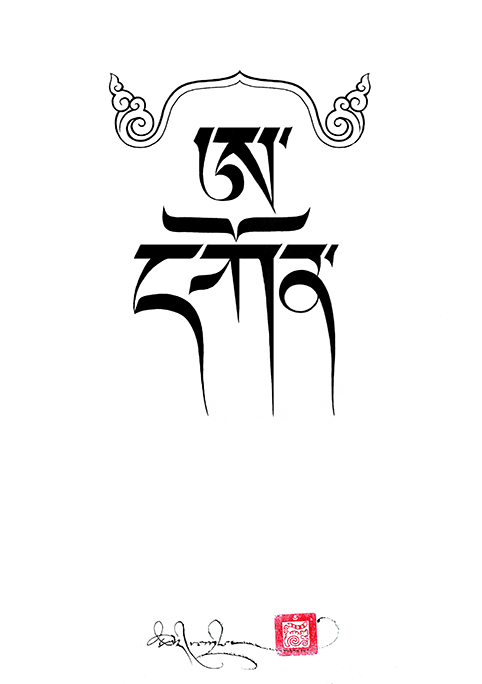
'Sphere of Dharmata' Tashi Mannox 2016


Sharjah Calligraphy Biennial has always been known to be of one of the most remarkable events taking place in the region. It aims at revealing the power of the letter in bringing cultures together. Through predominantly Arabic Calligraphy from contemporary artists across the Islamic world, there are over 206 calligraphy artists taking part, including other calligraphy masters of different cultures and traditions, totalling of 683 works.

Sharjah is the neighbouring state of Dubai in the United Arab Emirates. It is celebrated for its vast internationally attended universities and museums of the arts and Islamic culture.

So if you find yourself in Dubai Between 6th April – 6th June 2016 why not take the short drive to the Sharjah Calligraphy Museum to feast your eyes on the marvels of Islamic and other calligraphy disciplines of the world.

For the Sharjah Biennial in general, exhibition sites are a range of venues including the Sharjah Art Foundation Art Spaces, the Sharjah Art Museum, and the nearby traditional buildings and courtyards of the Arts and Heritage areas.


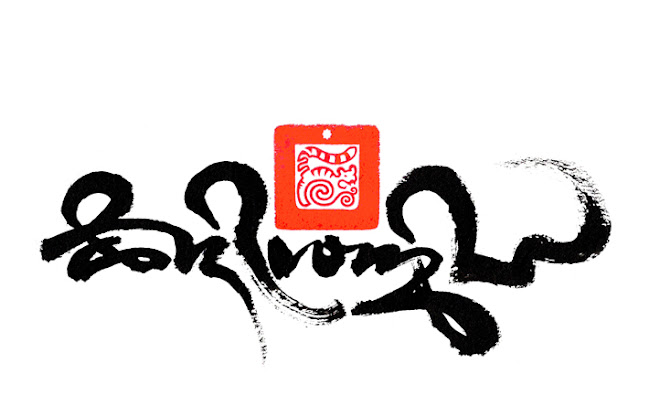
This is the third Sharjah Calligraphy Biennial that Tashi Mannox has been invited to partake, this time exhibiting two of his Tibetan calligrahy pieces especially created for this event, as seen above and below. 


'Born of Bindu' Tashi Mannox 2016


Sunday, 3 April 2016

Tibetan Calligraphy Retreat 2016


The view of Hay Bluff from the retreat centre


Tibetan Calligraphy Retreat with Tashi Mannox

16th – 22nd July 2016

-- Limited Spaces available --


After last years very successful and joyous Tibetan Uchen Calligraphy Retreat, Tashi presents a unique opportunity to thoroughly learn the art of Tibetan Umed handwriting. Again held in the conducive and beautiful border countryside of Wales.

During the six-day (seven nights) calligraphy meditation retreat, Tashi will instruct how to properly construct the Tsugtung Umed script, from the foundation of the alphabet through to the many subjoined letters, onto forming words and sentences in a coherent and beautiful formation. The remaining days of the course will focus on forming traditional mantras as well as seed syllables as a useful aid to Buddhist visualisation practices.

There will also be meditation instruction and daily sitting practice that will help calm and prime the mind for the optimum approach and application, which is considered at the core of learning and creativity.

For the more dedicated practitioner, this course provides a discipline that lays a firm foundation in the art of Tibetan calligraphy. Suitable for beginners as well as those who wish to improve their already acquired handwriting skills.

It would be helpful for first-timers to at least become familiar with the Tibetan alphabet in the Uchen script before attending the course.


Tibetan Uchen Calligraphy Retreat 2015 

Location: The blessed abode of Karma Dechen Choling at New Inn Brilley is situated on the Welsh, Herefordshire border. Described as being ‘unique, authentic and a little bit quirky’ it boasts magnificent views across the Wye valley toward the majestic Black Mountains of the Brecon Beacon National Park, that evokes an ideally peaceful retreat atmosphere of clarity and focus.

Alastair Sawday B&B award winning New Inn at Brilley offers a variety of charming accommodation options to suite most needs, from camping, shared dormitories to the 'Self-catering suite' (though you will be catered for during the retreat) as well as the luxury of the Rose Pink and Mustard Yellow double bedrooms in the old Inn. 
Please see price tariff below. To choose the type of accommodation you would be most comfortable with, please look into the website of New Inn Brilley.
Please note that the Rising Sun, Wagon over the Valley, Angles and Mother Earth accommodations are not available in the calligraphy retreat package, all other accommodation types have been kindly offered at a 20% concession, making the course more affordable for all.

It may also be possible to book accommodation before and after the official course schedule, however costs will be at the regular prices as stated on the New Inn Brilley website.

There are also local B&B’s within a few minutes drive as well as many more in the near-by picturesque town of Hay-on-Wye, see below for course fees for ‘Attending course from outside of New Inn’.

All-inclusive prices for six-day course per person:
  • One person in double room - £595.  booking deposit: £238 GBP
  • Two people sharing same double - £485 each. booking deposit: £194 GBP each.
  • Single in dormitory - £495. booking deposit: £198 GBP
  • Camping - £372. booking deposit: £148 GBP
  • Attending course from outside of New Inn - £330. booking deposit: £132 GBP

Meals and refreshments are included in the course fee. Please let known any special dietary requirements prior to your visit. Food will be vegetarian.

To book: Please contact Tashi by email contact@tashimannox.com to check availability and secure your place. Course capacity and accommodation is limited. A booking deposit of 40% or in full is required as indicated above. Remaining paid within one months prior to arrival: (June 16th) 
Cancelations: booking deposit will not be refunded after June 16th. 

How to get there: By public transport, the nearest Local train station is Hereford with direct links from London Paddington. Across from Hereford station concourse is a local 39 bus, Brecon service*1 alight at Hay-on-Wye, taxi*2 ride of 8 minutes from Hay-on-Wye to New Inn at Brilley.Please follow the link for map and directions by car. 

What to bring: As the British weather is unpredictable, you may need clothing to suit cooler wet days to pleasant hot dry days, so flip flops and Wellington boots.

Please bring personal art materials, such as calligraphy pens*3, a straight rule, pencil, pencil-sharpener and eraser. Three to four A3 size pads preferably water-colour paper is advised, as working on a larger scale is better for learning and for best results.

3* Suggested pens can be a range of different size italic felt tip calligraphy pens, or more professional Pilot Parallel Pens in a range of different nib sizes, available on the Internet with ink cartridges.


2*  Local Taxi: Mike 07881 726547 


Course Program:
Arrive by Saturday 16th 
7 pm supper.

Sunday 17th
8 am sitting meditation followed by breakfast between 8.30 and 9.30 am.
10 am Welcome and Introduction talk.
11.30 tea-break
11.50 calligraphy session.
1 – 2 pm lunch
2.30 calligraphy session
4 pm tea-break
4.20 pm Meditation explanation and practice.
7 pm supper and free time until bed.

Daily Schedule:
8 am sitting meditation followed by breakfast between 8.30 and 9.30 am.
10 am calligraphy session.
11.30 tea-break
11.50 calligraphy session.
1 – 2 pm lunch
2.30 calligraphy session
4 pm tea-break
4.20 pm meditation and calligraphy practice/talk.
7 pm supper and free time until bed.

Saturday 23rd
8 am sitting meditation followed by breakfast between 8.30 and 10 am.
Depart New Inn Brilley before 12 noon.


Monday, 22 February 2016

Dharma King


H.H. 16th Gyalwang Karmapa, photograph Peter Mannox.


From the forward:


"For a very long time, I have wanted to do something to commemorate the 16th Gyalwang Karmapa, Rangjung Rigpe Dorje. Although it has taken me so long to do something that honors his memory, it is a great privilege for me to be able to produce this book now. 


The aim of this publication is not merely to collect historical images, but to produce certain feelings and emotions. This book should serve as something impervious to the processes of birth and death, allowing us to know and to feel that we have never been parted from the 16th Gyalwang Karmapa – that he is in fact with us still.

For those who did not have the great fortune to meet him themselves, I hope this book offers a glimpse of what it meant to encounter him personally. The 16th Gyalwang Karmapa seldom gave Dharma teachings through words, but taught intensively through physical gestures, and tamed beings through his mere presence. As a tribute to this special quality of the 16th Gyalwang Karmapa, this book offers these images as a basis for experiencing his physical presence.

One of his major activities was to liberate all those who saw him, as he did when donning the Black Crown, so there is undoubtedly great value in any visual connection made with him. I make aspiration prayers that all those who see these photos or hold this book in their hands may receive the full benefit of his actual presence.

Great beings are not born great, but in the course of their lifetime from birth to parinirvana, their activities naturally come to reflect their greatness. These photos reveal the gradual unfolding of an astonishing range of activities, all accomplished in one far-too-short life. Among his many life achievements, the 16th Karmapa presided over the Karma Kamtsang lineage during the tumultuous transition from its traditional bases in Tibet into diaspora, where it was no longer supported by the traditional culture and geography of Tibet.

He ensured that his heart sons and the other lamas upholding the Karma Kamtsang all had a sound base in Sikkim after their escape from Tibet, and provided them with leadership, hope and a vision for the future in a land that was new and alien to them. Except through sheer spiritual power and fierce commitment, it is hard to imagine how anyone could bring the lineage through such radical changes intact, much less lead it to flourish. Yet looking at these photos, we can feel clearly the spontaneous joy of his perseverance, which makes his accomplishments seem so effortless.

I am deeply inspired by the 16th Karmapa’s resilience in the face of these obstacles. I take courage in how much he could achieve despite the great adversities he faced.

When we look at these photos, we are gazing back at a golden age that prevailed under the leadership of the 16th Gyalwang Karmapa. We may yearn to return to those golden times, when the lineage was whole and united. I myself look on that period with great longing, and am constantly praying that we can enjoy again that time of harmony and wholeness. Just as the images of all the places he visited and the people he met are united here in these pages, my heartfelt aspiration is that we can all join together to work side-by-side to benefit the beings of this new century. I pray that this happen soon; the magnitude of the suffering of beings is too great, and the social and environmental challenges facing the world today are too heavy for us to bear separately, and can only be fully addressed if we are united.

The idea of publishing such a commemorative volume was originally conceived as part of the Karmapa 900 celebrations, but due to the enormity of the task of researching and collecting all the images, it required until now to complete. I would like to express my thanks to all those who helped in creating this book, especially to Damchö for undertaking this project on my behalf, and to Louise Light for all her work in designing the book, as well as to the generous sponsors and to all those who contributed photographs."


- Ogyen Trinley Dorje, The 17th Gyalwang Karmapa

This book is Available here.


Monday, 11 January 2016

A Garland of Syllables


Kagyu Samye Dzong in Brussels presents a weekend workshop in how to properly calligrapher mantras and seed syllables with Tashi Mannox. 

10 am 20th - 21st February 2016

Learning how to write mantras and syllables to their ordered sacred proportion; participants may find this course particularly illuminating and useful as a visualisation aid, especially for sadhana practitioners within the Tibetan Buddhist tradition.

Tashi will also explain the meaning and symbolic significance of mantras and seed syllables within the relationship between their Tibetan and Sanskrit origins, exploring the quality of sound and visual integrity; which are considered transformative in body speech and mind. 

This workshop is perhaps for the more advanced, though if you are artistically able; it can be a fascinating journey into the beautiful forms of sacred calligraphy. The Mantras and seed syllable will be constructed in the classical Uchen style of Tibetan writing.

To book, please contact Leila, the course coordinator on leila.zitouni55@gmail.com for Info and registration.


Please bring personal art materials, such as calligraphy pens*3, a straight rule, pencil, pencil-sharpener and eraser. Three to four A3 size pads preferably water-colour paper is advised, as working on a larger scale is better for learning and for best results.

3* Suggested pens can be a range of different size italic felt tip calligraphy pens, or more professional Pilot Parallel Pens in a range of different nib sizes, available on the Internet with ink cartridges.


Monday, 30 November 2015

Calligraphies in Conversation 2015

Ziya Art Centre hosts its second Calligraphies in Conversation International Exhibition in multiple locations across Northern California between November 7th - December 12th 2015.


This year, over 70 artworks is curated out of over 250 submissions from local, national and international artists and calligraphers including Canada, Czech Republic, Egypt, France, Italy, India, Indonesia, Iran, Pakistan, Russia, Turkey, UK, and USA. A range of diverse traditions and scripts will be exhibited, with an array of Western, Chinese, Japanese, Tibetan, Arabic, Persian, Turkish, Hebrew, and Indian traditional calligraphy artworks as well as manifestations of calligraphy in some contemporary and abstract art pieces. The exhibition will host a wide assortment of medium including calligraphy with traditional tools, painting, pottery and ceramics, digital arts and 3D printing, mixed media, metal art and jewellery, collage, and installation.

This is the second occasion Tashi Mannox has been invited to exhibit at the Calligraphy in Conversation event - this time showing one of his more major art-pieces called the Five Coloured Hum. 


The Five Coloured Hum -

The main character hum is colored relating to the five Buddha families and their respective colours. This particular system is in accordance to the teaching of Chogyam Trungpa. (on Hum: “an approach to Mantra” from the collected works Vol 5)

1. bindu head ‘m’, red in colour, Buddha of all accomplishing wisdom.

2. crescent moon, green in colour, Buddha of all encompassing wisdom.
3. ‘ha’ body, white in colour, Buddha of mirror-like wisdom.
4. small ‘a’, yellow in colour, wisdom Buddha of equality.
5. ‘u’ vowel, blue in colour, Buddha of discriminating wisdom.

The Petsug text in Dutch gold leaf is from another text on the Hum character called:

‘The prayer for the realisation of Hum’.

‘Although the enlightened awareness of all the Buddhas of the three times without exception is innately pure, spontaneously established, and beyond description, imagination or expression, the unimpeded union of luminosity and utter lucidity within the Hum, within the self-radiance of the five poisons, uninterrupted pristine cognizance. 

Translation by Eric Tsiknopoulos


Here is the list of the venues:

- November 7th, 5 – 8 p.m. at ICCNC at 1433 Madison Street, Oakland CA 94612
Free opening reception ceremony with remarks, refreshments, and panel discussion and calligraphy demonstration by award winning international calligraphers including:
- Ronald Y. Nakasone: Master in East Asian literati tradition and a member of the Core Doctoral Faculty at the Graduate Theological Union (GTU)
- Arash Shirinbab: Award winning artist and Arabic-Persian calligrapher
- Amol Saraf: Award winning artist and tribal Indian calligrapher from India
- Leon Sun: Printmaker, photographer, painter, graphic designer, three-dimensional artist, writer, poet


- November 14th, 2 – 5 p.m. at Oakland Main Public Library at 125 14th St., Oakland, CA 94612
Free calligraphy demonstrations by award winning and renowned master calligraphers including:
- Rick Paulus: Former White House chief calligrapher
- Alan A. Blackman: Well-known calligrapher & lettering artist (Western scripts)
- Elizabeth Nisperos: Multidisciplinary calligrapher reviving the lost Baybayin script of Philippines 
- Arash Shirinbab: Award winning artist and Arabic-Persian calligrapher


- November 21st, 2 – 5 p.m. at OACC at 388 Ninth St., #290, Oakland, CA 94607
Free special calligraphy silent auction with refreshments, curator’s talk, and calligraphy and art demos by local calligraphers and artists


- December 12th, 2 – 4 p.m. at ICCNC at 1433 Madison Street, Oakland CA 94612
Free closing reception and hands-on workshop: The art of Persian painting and Islamic geometric design in relation to calligraphy. By Maryam Vesal, local artist and maestro of Persian Miniature and Tazheeb.


هنرمند گرامی، با عرض سلام، در صورتی که نام شما در میان اسامی پذیرفته شدگان در نمایشگاه ما بود، مجددا به شما تبریک گفته و خواهشمندیم که حتما هماهنگ فرمایید و آثار را از طریق پست تا قبل از تاریخ 30 اکتبر به دبیرخانه ما برسانید. اطلاعات دبیرخانه:

Organization: ICCNC/ for Calligraphy Exhibition
Address: Street: 1433 Madison St.; City: Oakland; State: California; Postal Code: 94612


      Contact Information: 510-283-4518 or ziya.art.studio@gmail.com
Monday, 8 June 2015

Akong Rinpoche Foundation logo


In March 2015, the eldest son of the former Akong Tulku Rinpoché, Jigme Tarap requested Tashi Mannox to come up with a logo design for the newly formed Akong Rinpoché Foundation, set up to continue the noble work of the 2nd Akong Tulku, and aid support in Northern India, Nepal and the Tibetan homeland, especially Akong Rinpoché's seat monastery in Eastern Tibet, Kham called Dolma Lhakang. 

"Since my fathers sudden departure from this world, we his family, more than ever appreciate the work he has been doing to help others throughout his lifetime. 
It is through his selfless dedication to help others that we have set up the Akong Rinpoché Foundation" - Jigme Tarap.

Several different designs were created from which one was chosen and approved with the blessing of H.E. Kenting Situ Rinpoché.


As a close disciple of Akong Tulku, Tashi explains the logo designs below:


These designs are all quite simply based on Akong's name: ཨ་དཀོན་ which has a very deep meaning. His name will always be given through all of his incarnations, so it is very significant and long lasting, therefore applicable to his new incarnation too.


ཨ་is the root letter of the Tibetan alphabet, that also signifies primordial awareness that is essential to the Nyingma tradtion that he is a lineage holder.


དཀོན་ means sacred, dear, precious, which he is to us of course. within the spelling of this word is the latter ཀ་ which is the first letter of the Tibetan alphabet and the letter/symbol of the Kagyu tradition, that he is also a lineage holder, and even said to be an emanation of Karmapa which also uses the same letter ཀ་ in the essential spelling of Kagyu.
The dominant quality of Rinpoche was his strength, he was a pillar of strength and stability for all of his students, this is why I stacked the word Akong one unit below the other, it stands like a strong tower and nicely balanced that gives stability. I have also stylised these letters to look both strong yet elegant, which was also the qualities of Akong Rinpoche.


The different coloured letters also refer to his activity of body speech and mind of white red and blue, as shown in the final design at the top of this post.


Framed in a circle gives a classical perhaps contemporary feel.


Then we could add a canopy at the top, that denotes the importance and sacredness of the word Akong, this is perhaps more typical traditionally Tibetan, but then Rinpoché was very traditionally Tibetan.