RELATED TIBETAN SCRIPTS
Showing posts with label Karmapa. Show all posts

Monday, 22 February 2016

Dharma King


H.H. 16th Gyalwang Karmapa, photograph Peter Mannox.


From the forward:


"For a very long time, I have wanted to do something to commemorate the 16th Gyalwang Karmapa, Rangjung Rigpe Dorje. Although it has taken me so long to do something that honors his memory, it is a great privilege for me to be able to produce this book now. 


The aim of this publication is not merely to collect historical images, but to produce certain feelings and emotions. This book should serve as something impervious to the processes of birth and death, allowing us to know and to feel that we have never been parted from the 16th Gyalwang Karmapa – that he is in fact with us still.

For those who did not have the great fortune to meet him themselves, I hope this book offers a glimpse of what it meant to encounter him personally. The 16th Gyalwang Karmapa seldom gave Dharma teachings through words, but taught intensively through physical gestures, and tamed beings through his mere presence. As a tribute to this special quality of the 16th Gyalwang Karmapa, this book offers these images as a basis for experiencing his physical presence.

One of his major activities was to liberate all those who saw him, as he did when donning the Black Crown, so there is undoubtedly great value in any visual connection made with him. I make aspiration prayers that all those who see these photos or hold this book in their hands may receive the full benefit of his actual presence.

Great beings are not born great, but in the course of their lifetime from birth to parinirvana, their activities naturally come to reflect their greatness. These photos reveal the gradual unfolding of an astonishing range of activities, all accomplished in one far-too-short life. Among his many life achievements, the 16th Karmapa presided over the Karma Kamtsang lineage during the tumultuous transition from its traditional bases in Tibet into diaspora, where it was no longer supported by the traditional culture and geography of Tibet.

He ensured that his heart sons and the other lamas upholding the Karma Kamtsang all had a sound base in Sikkim after their escape from Tibet, and provided them with leadership, hope and a vision for the future in a land that was new and alien to them. Except through sheer spiritual power and fierce commitment, it is hard to imagine how anyone could bring the lineage through such radical changes intact, much less lead it to flourish. Yet looking at these photos, we can feel clearly the spontaneous joy of his perseverance, which makes his accomplishments seem so effortless.

I am deeply inspired by the 16th Karmapa’s resilience in the face of these obstacles. I take courage in how much he could achieve despite the great adversities he faced.

When we look at these photos, we are gazing back at a golden age that prevailed under the leadership of the 16th Gyalwang Karmapa. We may yearn to return to those golden times, when the lineage was whole and united. I myself look on that period with great longing, and am constantly praying that we can enjoy again that time of harmony and wholeness. Just as the images of all the places he visited and the people he met are united here in these pages, my heartfelt aspiration is that we can all join together to work side-by-side to benefit the beings of this new century. I pray that this happen soon; the magnitude of the suffering of beings is too great, and the social and environmental challenges facing the world today are too heavy for us to bear separately, and can only be fully addressed if we are united.

The idea of publishing such a commemorative volume was originally conceived as part of the Karmapa 900 celebrations, but due to the enormity of the task of researching and collecting all the images, it required until now to complete. I would like to express my thanks to all those who helped in creating this book, especially to Damchö for undertaking this project on my behalf, and to Louise Light for all her work in designing the book, as well as to the generous sponsors and to all those who contributed photographs."


- Ogyen Trinley Dorje, The 17th Gyalwang Karmapa

This book is Available here.


Friday, 13 June 2014

Kunzig Shamar Rinpoche 1952-2014


Photography by Peter Mannox for  'Karma Kagyu Publishing House'*
Rumtek, Sikkim, early 70's.


Official Announcement Regarding the Passing of Kunzig Shamar Rinpoche from the Gyalwang Karmapa


Statement by His Holiness the 17th Gyalwang Karmapa Ogyen Trinley Dorje on the Passing of Kunzig Shamar Rinpoche, Mipham Chokyi Lodro.
Until the 10th Shamarpa, the omniscient Shamarpas have been great masters respected throughout Tibet, especially within the Karma Kamtsang Lineage where he was known as the Victorious Lord of Dance and the lineage’s strength and embodiment of wisdom, compassion and power. Despite a ban on the Shamarpas’ enthronement since 1792 for almost a century and seventy years, His Holiness the 16th Gyalwang Karmapa, in view of historical significance and for the benefit of Buddhadharma and all beings, sought consent from His Holiness the 14th Dalai Lama and enthroned his nephew as the Shamarpa, taking him under his wing for the guidance of his body, speech and mind.
However, as the folk saying goes, one may be fortunate to have a cow but not enough to get its milk. Similarly, after the Parinirvana of the16th Gyalwang Karmapa, due to wavering of commitment amongst his followers, a great schism occurred within the lineage. It was an unprecedented disharmony that is unimaginable even in a dream. Shamar Rinpoche’s activities have also been in various forms, both favourable and unfavourable and likewise, there are many past circumstances similar to endless ripples across water. These unfortunate situations are, I think, simply due to us not being aware of the omnipresence of our root guru and not being able to generate farsightedness for the benefit of Buddhadharma and all sentient beings.
I have had an unmistakable faith and respect towards Rinpoche from the time I was young. Therefore, with the hope of benefiting the Buddhadharma in general and the lineage in particular, and with the expectation that I may be able to offer some service towards his Dharma activities, I had the good fortune of meeting Rinpoche once. Yet, as my aspirations have not been fulfilled, his sudden passing away is a matter of great sadness.
As soon as I came to know of this hard to believe news, I instructed Rumtek Monastery, the main seat of our lineage and other monasteries to make offerings and perform pujas as grand as possible for 49 days, as Rinpoche has taken rest from the degenerate age of strife into the expanse of peace for a while.
With great hope and strong aspirations that Shamar Rinpoche’s reincarnation will embody the life stories of his predecessors, and the good fortune of harmony within the lineage will arise soon.
Karmapa Ogyen Trinley Dorje

12 June 2014


Shamarpa as a young regent looking like Buddha.
 Photograph belonging to Tashi Mannox.


* The 'Karma Kagyu Publishing House' is no longer in operation, this at the time was comprised of the three main seats of the Karma Kagyu in the West during the 70's and 80's :
D.K.L. Montignac, Dordogn, France.
K.T.D. Woodstock, New York State, U.S.A.
K.D.D.L. (Samye Ling) Dumfriesshire, Scotland, UK.


Wednesday, 29 May 2013

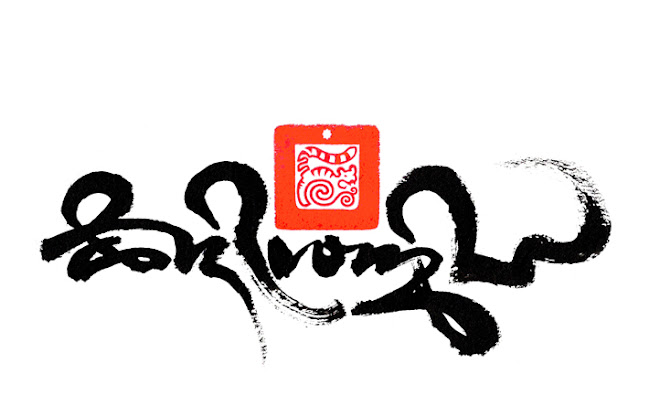
The Karmapa Khyeno mantra

The meaning of the "Karmapa Khyeno" mantra by H.H 17th Gyalwang Karmapa, Orgyen Trinley Droje.


The 16th Karmapa, Rangjung Rigpe Dorje during the
Black Hat ceremony at Dagpo Kagyu Ling, France.
Photography by Peter Mannox (Tashi's father).


The meaning of “Karma” is action or activity, and “Karmapa” means the one who does the activity. The activity here refers to the activity to benefit beings, and that is the main concern of the Buddhas in the ten directions and of the three times. 

"Karmapa Khyeno" Tibetan Uchen script,
ⓒ Tashi Mannox 2013

As to the origin of this title, it comes from a pure vision that the first Karmapa, Dusum Khyenpa, had when he was sixteen years old. As he first took the monastic vow, he had a vision that all of the Buddhas, Bodhisattvas, and the 100,000 Dakinis made a black hat out of their hair, and then offered it to him to wear. He was then consecrated or enthroned as the doer, the one who does the activities of all the Buddhas and Bodhisattvas. It was at that time that Dusum Khyenpa received the title “Karmapa”. Additionally, the name “Karmapa” does not necessarily refer to one particular individual. It can also be a general name for all Dorje Lopons – the Vajra Masters, or Vajra Acharyas - who do the activities of the Buddha. Therefore, it can be regarded as the general name for all great and genuine lamas. It is acceptable to call every lama “Karmapa”. Buddha once said, “When the Dharma is nearing extinction, I myself will come as Vajra Masters or Vajra Acharyas, and then do the activity of the Buddha.” What is the activity of the Buddha? It is to bring out the Buddha nature in people – the side of them that is positive, white, or light. To bring that out is to do the activity of the Buddhas. So therefore, when we talk about the “Karmapa” or say “Karmapa Khyeno”, it is also generally to bring out the positive action of the Buddhas in all sentient beings. Finally, in “Karmapa Khyeno”, “Khyeno” means “please think of me”. With this, we remember the lama again and again, constantly keeping in mind the positive qualities of the lama and praying to him or her. Milarepa once said, “When I am in a crowd, I call for my lama from my heart.” In the same way, you can evoke the lama, holding him or her in your heart. It is not necessary to say it aloud. But if you want to say it aloud, there is also nothing wrong with that.

from “17th Gyalwang Karmapa's Teachings “Living The Dharma” English Translator: Ringu Tulku Rinpoche at Tergar Monastery, Bodh Gaya, India. 1/12 ~ 1/14, 2009 http://www.kagyumonlam.org/English/Lectures/20090114_HHK_Teachings_Living_The_Dharma.html


Karmapa Khyeno !

Read more on Karmapa here.

Friday, 12 April 2013

Previous incarnations and new Art


A rare and remarkable old photo of the 16th Karmapa flanked on his right by the 11th Situpa and to his left the 6th Ponlop Rinpoche. 

The photo is believed to be taken in the Late 1940's early 50's near to the seat Tsurpu Monastery of the Karmapa's who is the head of the Kagyu linage.

These three great Kagyu Lamas have since incarnated to continue their linage as realized teachers to benefit all sentient beings. 


It is notable that all three present incarnations are great calligraphy artists. The previous Ponlop Rinpoche was also an accomplished Thanka painter, who has continued his talents in a new medium  till the present day.

'Ego' in English and Tibetan,
by Ponlop Rinpoche.

In old Tibet, at the time of the above photo, calligraphy was practiced as a discipline to a high degree, however was not created as a free expressive art-form as it is in the Japanese Zen tradition. It is only through these new incarnate Lamas, who are engaged with communicating Dharma in the world away from Tibet, that Tibetan calligraphy has developed and established a new expression.

'Kagyu' Tibetan calligraphy by
Tai Situ Rinpoche.

Another great Lama and Kagyu linage holder Chogyam Trungpa Rinpoche and was the first to make this new artistic leap, while establishing Buddha Dharma during the 70's and 80's in America. 
Trungpa Rinpoche created expressive calligraphy art that was a bold and free break-away from the precis Tibetan handwriting styles, followed closely by 12th Tai Situ Rinpoche. Though it is not clear if it was Trungpa who set the new trend or if there was a general awakening of creative expression.

'Dharma' Tibetan calligraphy
by Chogyam Trungpa Rinpoche.

If it was not for the brilliance and initiative of the early Tibetan Lamas communicating Dharma, there would not be such a strong and lively practice of Tibetan calligraphy that has established its own place within the contemporary art world.


The late Chogyam Trungpa Rinpoche


Sunday, 13 February 2011

Karmapa

ཀ་

The badge of Tsurphu monastery,
the original seat of the Karmapas
in Tibet, founded in 1189 by the
Fist Karmapa Dusum Chenpa.
ཀརྨ་བཀའ་བརྒྱུད།

Ka ཀ་ is the first letter of the Tibetan alphabet and the first letter of the name Karmapa ཀརྨ་པ།
But more notably; the latter ka also refers to speech, that is of the aural transmission of the Dharma though the Kagyu lineage known as the 'Golden Rosary' as one bead in a string leads to another, so are the teachings and practices passed on down through  an unbroken lineage to the present day.
The Karmapa, Ogyen Trinley Dorje is the head of the Karma Kagyu lineage and the 17th in the line of Karmapa's 

The 16th and 17th Karmapas.
The above photo shows an astonishing resemblance between the 16th and 17th Karmapa of a similar age, not only in photo composition but also in location on grass next to a tent in the grounds of his seat monastery called Tsurphu in central Tibet. 
It was quite by accident that these two photographs found there way together after a life-time had passed between one incarnation to another.  

The 16th Karmapa Rangjung Rigpe Dorje '1924 - 1981'
A a seldom seen and delightful photography of the 16th Karmapa, was taken by Tashi's father Peter Mannox, who documented many other of the Kagyu lineage holders during the 1970's at Rumtek monastery in Sikkim, India.

The 17th Karmapa Ogyen Trinley Dorje, born '1985 -
The present Karmapa now resides in Northern India at his temporary camp at the Gyuto monastery in Dharamsala.


Karmapa-chenno mantra, Dru-tsa script, Tashi Mannox 2022
As the central figure to the Kagyu linage, the mantra to ask for blessing of the Karmapa is pronounced karmapa chénno which translates as 'Karmapa here me/take heed'.


To the left is an impression of one of the Karmapa's seals, signed by the 16th Karmapa, 
the hand-writing above the seal translates as
'Karma Kagyu Dharma institution'
༄། ཀརྨ་བཀའ་མརྒྱུདཆོས་སྡེ།
At the center of the seal design is the letters 'karmapa'.


A similar seal design to the above, perhaps a copy, clearly shows the letters 'karmapa' carved into the stone seal.
The script style is the father to the Horyig seal script called Phags-pa.
In both seal designs, the Phags-pa letters sit on an open lotus, radiating aura lines, above the letters are three 'jewels' representing the Buddha, Dharma and Sangha, either side of which are the sun and moon.  


At The top of this post is a badge of Tolung Tsuphu Monastery, there is an interesting little story to the creation of this badge of an international collaboration. 

Once upon a time... In June 1996 Tashi visited Tsurphu monastery along with Akong Rinpoche and his brother Lama Yeshe Losal, to meet the young 17th Karmapa. This was a particularly special occasion,  as for Lama Yeshe and Tashi, it was the first time they had seen the Karmapa since his previous incarnation.

Akong Rinpoche, Karmapa and Tsering Tashi.
One particular day Akong Rinpoche together with Tashi organized an audience with the Karmapa. The main purpose of this meeting was to take measurements so that Tashi could make robes for the Karmapa at a later date. 
Much of the day was spent in the Karmapa's private quarters where games where played with much enjoyment and laughter.
It was decided to offer Karmapa an embroidered badge, which He liked as something to give to every one of the monks in the monastery representing Tsurphu.

Drawing by Karmapa and Tashi.

As in the Photo, all three huddled around Karmapa's seat table to plot out how the badge should look. Above is a rough sketch that was made by Tashi at the time under the instructions from both Karmapa and Akong, additional marks were added by Karmapa, such as the curls at the top as he explained the decorated surround of the Dharma wheel and swirls to the scroll. Below He added the moon and the sun and even wrote moon and sun next to them. The design session ended with how to draw a star.

Fresh in mind and sketch in hand, Tashi returned to Scotland where he requested Sherab Palden Beru a master of Tibetan art, to create a design based on Karmapa's instruction. The design at the top of this post was created by one of Sherabs students under his direction.

Tashi then contacted some Buddhist friends, Tony and Rose, he had met earlier in that year, who happened to run a badge making business in Australia called 'Badger Makes Badges'. The artwork was sent to them around the globe and being devoted to Karmapa, hundreds of beautifully embroider badges where returned to Scotland and offered to Karmapa by Akong Rinpoche on his next returning visit to Tibet.

THE END


Another Karmapa related post on the Karmapa's dream flag can be followed here.


Tuesday, 12 May 2009

Homage to my Teachers.


"Namo Guru Benza dhara Ye"
"Homage to my teacher the bearer of reality"


Akong Rinpoche and Tashi Meeting H.H 17th Karmapa in Tsurphu, Tibet, 1996


His Eminence Tai Situ Rinpoche amused with Tashi, Samye Ling temple 1995


ACKNOWLEDGMENT 
to my teachers:

His Eminence The 12th Tai Situpa, whom is an inspiration and guide in Tibetan calligraphic art.
My spiritual father and scriptural moderator, the late Akong Tulku Rinpoche, along with his brother Lama Yeshe Losal Rinpoche, Abbot and retreat master.
To my beloved teacher in the Tibetan arts, Master of Thanka painting, the late Sherab Palden Beru.
Also my teacher in Lanza and Wartu Sanskrit scripts, Lama Pema Lodrup of Dharamsala.
To Chogyam Trungpa Rinpoche, who opend my eyes to contemporary Tibetan calligraphy.
To the late Tenga Tulku, for his precise instruction in the art of creating Mandalas.
Not forgetting some of my other teachers such as, Thrungu Rinpoche, Lama lodro of Palpung and the late Lama Thubten of Palpung and Nyingma Lama Pema.


Tashi Mannox happily sandwiched between Sherab Palden Beru and Akong Tulku Rinpoche, London Samye Dzong 2008.


Tashi with Lama Pema Lodrup in 2000, at his home with beautiful garden, at the Men-Tsee-Khang, Khara Danda road, Dharamsala, India.


Palpung Lama Lodro and Tashi at Karma Naro in the Welsh borders 1987.


Tenga Rinpoche leading a course on 'Vajrayana ritual/mandalas' in the old shrine room of Samye Ling Johnstone house 1986.


Sunday, 19 April 2009

Geomantic dream flag

༄། རྣམ་མཁྱེན་རྒྱལ་དར། །།

Photo: James Wainwright 

The 16th Gyalwa Karmapa, is well known for his visions and prophesies, one such divine manifestation is commonly known as the 'Kagyu flag' and more famously called the 'dream flag', in reference to the fact that the banner appeared to him in a dream.

He  named the banner 'namkhyen gyaldar' meaning "Victorious Flag of Buddha’s Wisdom”.
Imparting the details of his vision to his close disciples, His Holiness Karmapa went on to proclaim: 

“Wherever this banner is flown the Dharma will flourish.”

Since the birth of the flag, there has evolved a few different versions of the Karmamap's dream flag, most of these versions seem to have strayed from the flags' original legacy; as perhaps its new creators simply did not know and appreciate the profundity of its sacred geomantic construction.

This blog post is to explain and re-introduce the original proportionate construction and meaning behind the banner. There is also a true version of the dream flag that can be freely taken and reproduced for your own purposes, found at the bottom of this post.

This flag shows the incorrect  
construction and shades of colour.
Here shows the flag in respect of the 
correct colours and construction.


During the early 90's Tashi was asked to reproduce the Dream flag by the Samye Ling Monastery in Scotland, who's intention was to donate the flag to Karma Kagyu Buddhist establishments around the world, in order to replicate the flag correctly, in respect of its original design. 
Tashi was privileged to have first-hand authentication of the original banner design to him from two different sources:

One such original design of the banner hangs framed on a wall of a The seat  monastery of H E Jamgon Khontrul Rinpoche in Pullahari, above Boudha, Kathmandu. 
Tashi was sent to investigate the flag with instructions to take notes so to replicate the flag correctly to the right design and dimensions.
The other reference of the flag, was personally explained to Tashi by H E Situ Rinpoche. As Situ Rinpoche was witness to the original creation of the flag while together with his Guru H.H. the 16th Karmapa. 


The proportionate construction of the dream flag.

A sketch made by H.H 17th Karmapa Ogyen Trinley Dorje
Confirming the correct construction of the dream flag.


The sketch above is by the hand of Situ Rinpoche, (note his signature bottom right) who made the drawing especially for Tashi, explaining the geomantic arrangement of how the two waves are approached and swirl together from all four directions: two sides, top and bottom. 
It is also important to noted that in this drawing; the over-all dimensions of the flag was dependent on the dimension of the piece of paper to hand at the time. Never-the-less, the same proportionate construction of the waves should not be altered from their horizontal axis when applied to a more standard 2:1 flag proportion, as shown in the image below.

Situ Rinpoche explained further that the center point of the two waves/swirls should be at the same horizontal plain, contained within the rectangular construction box (as he indicated in his drawing above), this 'construction box' should be placed squarely at the center of the flag and not on a sloping angle, (as many other versions of the dream flag are reproduced) 


The possible reason for the misinterpretation of the wave alignment placed on a sloping axis in other corrupted versions of the flag, could have been confused with to the angular division between the two colours of yellow on the bottom side and blue on the top. This division runs from bottom left up to top right corners, as if aspiring from earth to heaven. 
It seems that such profundity of design could have easily been overseen, if not fully understood while creating the banner and lead to the misrepresentation of the dream flag.

The correct proportionate lined construction of the banner is shown more precisely on the diagram below. This is has also been designed to fit with the international standard 2:1 flag proportion.


The geomantic proportionate construction of the dream flag applied to
the 2:1 standard flag proportion, as drawn by Tashi Mannox
from the instruction of Situ Rinpoche, 1993.


 The colours of the Flag.  

Moreover, Situ Rinpoche explained the colours of the flag to be a bright  sky blue and should not be too dark, the yellow should be earth like, not Lemon yellow and compliment the sky blue in tonal brightness, as the far below colour image  shows. 

During 2012 H.H 17th Karmapa Ogyen Trinley Dorje confirmed the two flag colours, officiating them as Pantone 306 C  and 116 C


To demonstrate the correct balance of tone, the flag colours in the image directly below, have been converted to black and white. 
As you can see there is little difference between the tones, which indicates a similar balanced in brightness within the colours. 
The contrast that catches the eye is more in the colour rather than with the tone, as the particular blue and yellow used is far apart in the colour spectrum and complimentary. 


The tonal balance of the Dream flag.


The meaning behind the dream flag.
"Victory Banner of Buddha Wisdom”

The elements of the flag's geomancy and colours are symbolic of the relative and absolute truth. Relatively the colours blue and yellow represent the sky and the earth, the waves symbolize the Buddha Dharma.
On the absolute level the colours represent the union of emptiness and clarity, the true nature of mind. The intertwining waves symbolizes the union of compassion and emptiness, which is the essence of all phenomena.


The Karmapa's official Namkhyen Gyaldar  Dream Flag.


Please feel free to take this above image for your own use and publish it in keeping with the Karmapa's wishes: that wherever this flag graces, Dharma will flourish. 


May goodness increase !