RELATED TIBETAN SCRIPTS

Wednesday, 29 May 2013

The Karmapa Khyeno mantra

The meaning of the "Karmapa Khyeno" mantra by H.H 17th Gyalwang Karmapa, Orgyen Trinley Droje.


The 16th Karmapa, Rangjung Rigpe Dorje during the
Black Hat ceremony at Dagpo Kagyu Ling, France.
Photography by Peter Mannox (Tashi's father).


The meaning of “Karma” is action or activity, and “Karmapa” means the one who does the activity. The activity here refers to the activity to benefit beings, and that is the main concern of the Buddhas in the ten directions and of the three times. 

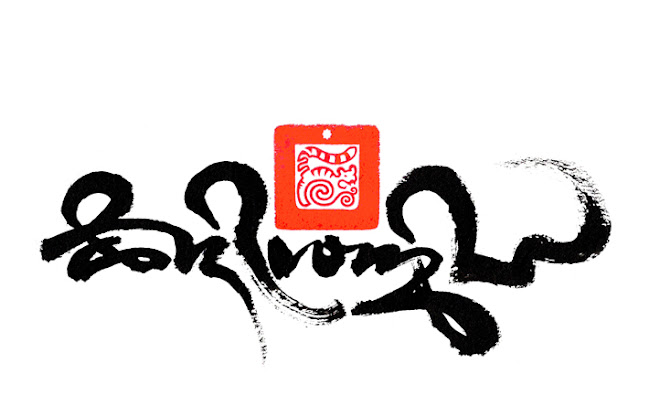
"Karmapa Khyeno" Tibetan Uchen script,
ⓒ Tashi Mannox 2013

As to the origin of this title, it comes from a pure vision that the first Karmapa, Dusum Khyenpa, had when he was sixteen years old. As he first took the monastic vow, he had a vision that all of the Buddhas, Bodhisattvas, and the 100,000 Dakinis made a black hat out of their hair, and then offered it to him to wear. He was then consecrated or enthroned as the doer, the one who does the activities of all the Buddhas and Bodhisattvas. It was at that time that Dusum Khyenpa received the title “Karmapa”. Additionally, the name “Karmapa” does not necessarily refer to one particular individual. It can also be a general name for all Dorje Lopons – the Vajra Masters, or Vajra Acharyas - who do the activities of the Buddha. Therefore, it can be regarded as the general name for all great and genuine lamas. It is acceptable to call every lama “Karmapa”. Buddha once said, “When the Dharma is nearing extinction, I myself will come as Vajra Masters or Vajra Acharyas, and then do the activity of the Buddha.” What is the activity of the Buddha? It is to bring out the Buddha nature in people – the side of them that is positive, white, or light. To bring that out is to do the activity of the Buddhas. So therefore, when we talk about the “Karmapa” or say “Karmapa Khyeno”, it is also generally to bring out the positive action of the Buddhas in all sentient beings. Finally, in “Karmapa Khyeno”, “Khyeno” means “please think of me”. With this, we remember the lama again and again, constantly keeping in mind the positive qualities of the lama and praying to him or her. Milarepa once said, “When I am in a crowd, I call for my lama from my heart.” In the same way, you can evoke the lama, holding him or her in your heart. It is not necessary to say it aloud. But if you want to say it aloud, there is also nothing wrong with that.

from “17th Gyalwang Karmapa's Teachings “Living The Dharma” English Translator: Ringu Tulku Rinpoche at Tergar Monastery, Bodh Gaya, India. 1/12 ~ 1/14, 2009 http://www.kagyumonlam.org/English/Lectures/20090114_HHK_Teachings_Living_The_Dharma.html


Karmapa Khyeno !

Read more on Karmapa here.

Wednesday, 8 May 2013

Art exhibition launch


A detail of a new embossed 'ink-less' calligraphy
Especially created for the new exhibition.


A beautiful sunshine spring day marked the opening of Tashi Mannox's "Illuminated Optimism" exhibition at the Monnow Valley Arts Centre on the border of Wales and the Brecon Beacon National Park.


Chief Trustee Rupert Otten (pictured center) introduces Richard Kindersly and Tashi Mannox at their joint show opening.


Short welcome speeches were delivered by Richard and Tashi to a select audience including Tashi's mother Sally Somersby and his Art photographer and giclée printer Malcolm Payne of 'Colourfast Editions'


Malcolm, Tashi and Sally.


Tashi explains his works that are exhibited in the light and fresh studio space 


The exhibition runs along side Richard Kindersly's word sculpture show until the 30th June 2013, a well worth trip out into the stunning Herefordshire countryside near to the Black Mountains of the Brecon Beacon National Park.

The Monnow Valley Art centre is open to the public:
Wednesday - Friday 11am - 5pm
Weekends 2 - 5pm

Entrance to gallery exhibitions is free, but a donation is requested if not visiting the gardens.
Entrance to gardens, sculpture and National Collection of Contemporary Memorial Arts is by donation of £5 per adult (concessions £3) children under 14 for free.

The Monnow Valley Arts Centre   see map
Walterstone
Herefordshire
HR2 0DY

01873 860 529


Friday, 12 April 2013

Calligraphy of paper and stone


For those who enjoy the art of beautiful letterform, be it inked on paper or incised in stone, of both East and Western traditions. You may enjoy to adventure out to contemplate art in a clear fresh gallery space or dwell in nature to enjoy the freedom of wondering between sculptures of wise words.....

From the 4th May to the 30th June 2013

Internationally celebrated Richard Kindersly and Tashi Mannox hold a joint exhibition at The Monnow Valley Arts Centre, majestically located beside the Black Mountains of the Brecon Beacon National Park.

From its purpose built art studio, galleries and beautifully arranged gardens, dotted with scriptural carved standing stones and other sculptural wonders, is a view that inspires greatness and lifts the heart.


Throughout the gardens Richard Kindersly exhibits his calligraphy sculptures called 'Material World'. In this exhibition Richard explores the difference between gestural and geomatrically constructed letter forms. These are skillfully demonstrated as carved letters in sandblasted glass, moulded concrete, wood, steel and paper (sometimes with the same text) to show us how lettering can be used in unusual ways and unusual materials.


While in the studio gallery Tashi Mannox exhibits a collection of works called 'Illuminated Optimism' from his Contemporary and traditional calligraphy series, depicting positive and thought provoking Tibetan Buddhist themes in a medium of ink on paper. Such as his first public showing of 'Hog eats Cock eats Snake' which represents the basic foundation of Samsara and the three aspects of ego: delusion, attachment and aversion, that feed on each other in a perpetual cycle. To remedy this on the path to liberation, Tashi illustrates the classical 'Four Foundations', four topics that are traditionally meditated upon, that lay a firm foundation of right motivation and diligence on the path to enlightenment.

The original Art pieces in the exhibition have been the basis for a series of high quality, limited edition Giclee prints that are also available for sale, making these works accessible to all.

A new embossed mantra art piece also premiers at the exhibition. This piece is the first of a new series of 'ink-less' calligraphy pieces which again demonstrates the diversity of Tashi's talent in bringing the integral tradition of Tibetan calligraphy into the 21st century.


The Immaculate Ushnisha mantra
om padmo ushnisha bi ma le hum phat

གཙུག་ཏོར་དྲི་མེད།

This is a purification mantra that is traditionally displayed on a beam or above a doorway.
It is said that the mantra has the power to bless and cleanse every-time one passes below, and is sometimes named as the ‘mind your head’ mantra.  


The Monnow Valley Art centre is open to the public:
Wednesday - Friday 11am - 5pm
Weekends 2 - 5pm

Entrance to gallery exhibitions is free, but a donation is requested if not visiting the gardens.
Entrance to gardens, sculpture and National Collection of Contemporary Memorial Arts is by donation of £5 per adult (concessions £3) children under 14 for free.

The Monnow Valley Arts Centre   see map
Walterstone
Herefordshire
HR2 0DY

01873 860 529


Previous incarnations and new Art


A rare and remarkable old photo of the 16th Karmapa flanked on his right by the 11th Situpa and to his left the 6th Ponlop Rinpoche. 

The photo is believed to be taken in the Late 1940's early 50's near to the seat Tsurpu Monastery of the Karmapa's who is the head of the Kagyu linage.

These three great Kagyu Lamas have since incarnated to continue their linage as realized teachers to benefit all sentient beings. 


It is notable that all three present incarnations are great calligraphy artists. The previous Ponlop Rinpoche was also an accomplished Thanka painter, who has continued his talents in a new medium  till the present day.

'Ego' in English and Tibetan,
by Ponlop Rinpoche.

In old Tibet, at the time of the above photo, calligraphy was practiced as a discipline to a high degree, however was not created as a free expressive art-form as it is in the Japanese Zen tradition. It is only through these new incarnate Lamas, who are engaged with communicating Dharma in the world away from Tibet, that Tibetan calligraphy has developed and established a new expression.

'Kagyu' Tibetan calligraphy by
Tai Situ Rinpoche.

Another great Lama and Kagyu linage holder Chogyam Trungpa Rinpoche and was the first to make this new artistic leap, while establishing Buddha Dharma during the 70's and 80's in America. 
Trungpa Rinpoche created expressive calligraphy art that was a bold and free break-away from the precis Tibetan handwriting styles, followed closely by 12th Tai Situ Rinpoche. Though it is not clear if it was Trungpa who set the new trend or if there was a general awakening of creative expression.

'Dharma' Tibetan calligraphy
by Chogyam Trungpa Rinpoche.

If it was not for the brilliance and initiative of the early Tibetan Lamas communicating Dharma, there would not be such a strong and lively practice of Tibetan calligraphy that has established its own place within the contemporary art world.


The late Chogyam Trungpa Rinpoche


Thursday, 14 March 2013

Chögyam Trungpa's Profound Treasury of Dharma.


'Ananda' Chögyam Trungpa Rinpoche


Last year Shambhala invited Tashi Mannox to contribute some of his calligraphic illustrations to a new three volume publication based on a collective of Chögyam Trungpa Rinpoche's thirteen years of Vajradhatu seminars and lectures, called the Profound Treasury of the Ocean of Dharma.

The compilation and editing of this material for general publication has taken more then thirty years, resulting in one volume for each Yana, or major stage of the Buddhist path.

"The Profound Treasury of the Ocean of Dharma represents Chögyam Trungpa's greatest contribution to Western Buddhism. This three-volume collection presents in lively, relevant language the comprehensive teachings of the Tibetan Buddhist path of the hinayana, mahayana, and vajrayana."

- Available in hardback from Shambahla Media.


Monday, 11 March 2013

That Spurs the Monk

Tashi Mannox speaks of his Childhood inspiration and magic that is insightful to the core of his artistry in Tibetan Calligraphy. 

Tashi as a monk, Samye Ling 1993.

A short film of 7 minutes
Directed, produced and filmed by Brian O'Neill
Edited by Fernando de Juan 


Wednesday, 6 February 2013

ཆུ་མོ་སྦྲུལ་ལོ། Tibetan New Year Greetings.


Auspicious Good Wishes for the New Year of the Female Water Serpent
2013


༼ཆུ་མོ་སྦྲུལ་གནམ་ལོ་གསར་བཀྲ་ཤིས་བདེ་ལེགས་ཞུ༽