RELATED TIBETAN SCRIPTS

Monday, 23 May 2011

Tibetan Calligraphy workshop 25th June 2011


A weekend workshop in Tibetan Calligraphy in London. Suitable for complete beginners in Tibetan writing and also for those wishing to polish their skills. During the course, Tashi Mannox will explain the proportionate construction of the Tibetan Uchen script which is essential as a foundation to create competent letter form for beautiful calligraphy. Calligraphy pens and sketch pads will be supplied.

The workshop will culminate with the creation of the Mani mantra with a stage by stage explanation of the mantra's sacred significance.


Sunday, 3 April 2011

The Foundation of Spiritual Practice


༄། ཐུན་མོངས་ཀྱི་སྔོན་འགྲོ་བཞི།
  Four contemplations.

Detail of "Impermanence" a calligraphy by Tashi Mannox
shows small dancing skeletons in mockery of permanency.

Fundamental to Tibetan Buddhist practitioners are the Four Foundations, four topics that are meditated upon as a preliminary practice in order to overcome attachment and develop a firm spiritual foundation and generate keen motivation.

1. Precious human existence.
2. Impermanence.
3. Causality.
4. Samsara.

The first contemplation is on ‘precious human birth/existence’ is how rare and difficult it is to obtain and how easily it can be lost, such condition of fragility leads onto the next contemplation of ‘impermanence’ that how everything is in constant change and deterioration. The third is to reflect upon the law of ‘Karma’ cause and effect, being primarily the driving force of Samsara; is the fourth contemplation on the suffering of ‘cyclic existence’ the entrapment of the attachment to material possessions and the expectation and disappointment of loved ones, which continuously grips ones habitual attention.

Tashi Mannox illustrates the ‘four foundations’ as a set of four calligraphic masterpieces, intended to be thought provoking as a subject of meditation and reflection, that can be an aid to ones practice if not a pleasing iconographic art piece for the wall.

Precious human existence.
མི་ལུས་རིན་ཆེན།
Appreciate precious life, as it is difficult to obtain and easily lost.
As a seed, the essence of life, uncoils in growth, delicate, precious and whole.
This curling Bindu shape, Sanskrit, Tigli in Tibetan, holds the words ‘precious human birth’ in a Tibetan Drutsa script.

Chinese ink on heavy water colour paper, 57x76 cm, 

© Tashi Mannox, created 2007


Impermanence.
མི་རྟག་པ།
Nothing ever stays the same!
The words ‘mi rtag pa’ impermanence in the toppling Tibetan Tsugring script, are made up small dancing skeletons, which fade into decay at the base of the letters.
The personal seal of the artist is also broken into two.

Chinese ink on heavy water colour paper, 57x76 cm, 

© Tashi Mannox, created 2007


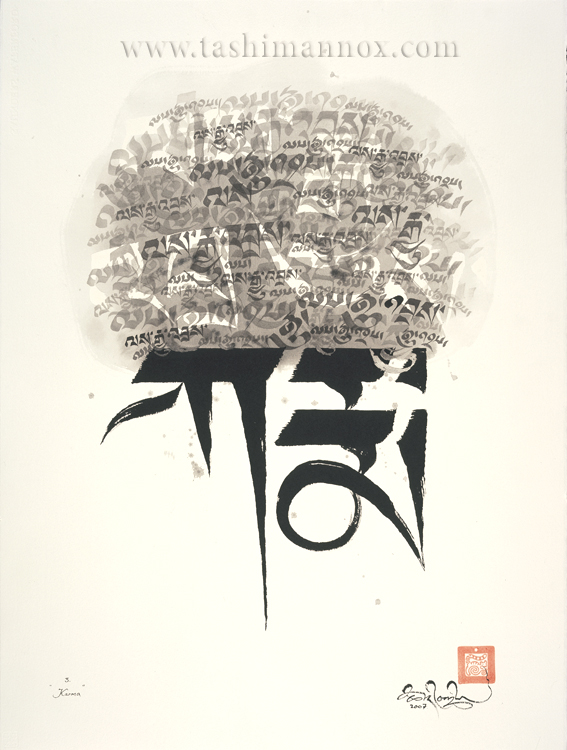
Cause and Effect.
ལས་རྒྱུ་འབྲས།


The heavy dept of past negative actions are always collected by the law of Karma.
Equally any positive actions accumulated will result in the fruition of good Karma.
There is no rule in time to say when good and bad Karma will ripen, other than all the relevant causes and conditions come together for that particular ‘karma’ to manifest.


Chinese ink on heavy water colour paper, 57x76 cm, © Tashi Mannox, created 2002
Samsara, Cyclic Existence.
ཁོར་བ།


Freedom is in non-attachment.
The circle of Tibetan ‘Tsugthung’ script reads “cyclic existence” this repeats relentless with no beginning and no end. Such is the nature of Samsara.


Chinese ink on heavy water colour paper, 57x76 cm, © Tashi Mannox, created 2007


The four Preliminaries are a classical topic for practitioners, which have provided a strong backbone for the historically famous lineage holders and Saints of Tibet, notably in they're teaching and songs, such as Milarepa and his spiritual son Gampopa.

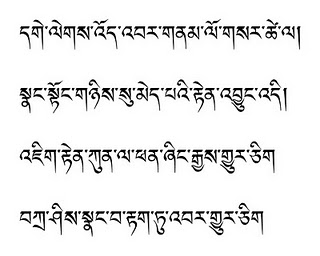
༄། རྒྱུ་ནི་བདེ་གཤེགས་སྙིང་པོ་སྟེ། རྟེན་ནི་མི་ལུས་རིན་ཆེན་མཆོག། རྐྱེན་ནི་དགེ་བའི་བཤེས་གཉེན་ཡིན། ཐབས་ནི་དེ་ཡི་གདམས་ངག་སྟེ། འབྲས་བུ་རྫོགས་སངས་རྒྱས་ཀྱི་སྐུ། འཕྲིན་ལས་རྟོག་མེད་འགྲོ་དོན་མཛད། །

“The cause is the Buddha nature. The support is the most precious human body. The circumstance is the spiritual friend. The method consists of his instructions. The result consists of the kayas of perfect Buddhahood. The activity is the spontaneous accomplishment of beings’ benefit.”                              From the ‘Jewel Ornament of Liberation’ Jé Gampopa.


The above images of the four Contemplations are available as a set or individually as limited edition prints, these are personally hand signed and sealed by the artist.
Prints can be ordered in two sizes. The larger size being near to the actual size of the original artworks of approximately 67x50 cm. The smaller size prints are approximately half the shown size.
For more information such as prices and how to order, please visit the link here. 


Friday, 4 March 2011

Obstacle Clearance


'Homage to Mahakala' the face of the Great Black one, Tashi Mannox 2007

On the last day of the Tibetan year prayers are offered to the wrathful Dharma protector called Mahakala 'the Great Black One'. This is traditionally an all day sadhana སྒྲུབ་ཐབས practice to clear away obstacles of the old year to clear the way for a peace and progress in the Dharma. It is a cathartic and effective way to let go of negativity and purify body speech and mind of the new year ahead.

The yearly Mahakala practice culminates with a ceremonial 'cham' dance to symbolically chase out and repel the demons of the old year, called the black hat dance. The main character of the dance is usually performed by a high Lama who is particularly attained in  the visualization of the sadhana, who's role is given the title dorje lopon. 

The Mahakala dance has its origins from a time in historical Tibet when an anti-Dharma King was shot with an arrow from a bow concealed in the long pointed sleeves of the gown worn by the dancers of his court. This has since become symbolic of the victory over the inner and outer obstacles one may encounter on a spiritual path.  A similar costume is worn today together with an apron depicting the face of Mahakala, the protector of the Dharma.

A young Gyaltsab Rinpoche wearing the black hat dance costume at Rumtek
monastery in Sikkim. Photography by Peter Mannox.

With the dust of the old year symbolically clean away, it is traditional for a more practical spring clean of the household in Tibet, which with the celebrations of the new year 'losar' and on this day only, the servants of the house would be allowed to swop cloths and roles with the masters, in a party atmosphere of joy and a refreshing shake-up of conformity.


The Tibetan New Year of 2011 bounds in with the Female Iron Hare or Rabbit, which is said to be a particularly joyful and prosperous year ahead.


May goodness increase.

Wednesday, 2 March 2011

Tibetan calligraphy work-shop


The Shang Shung Institute logo.

The 'Shang Shung' London Institute of Tibetan Studies presents a weekend workshop of Tibetan calligraphy, lead by Tashi Mannox on 25-26th June 2011. 

For more details, to book and to partake in the workshop please follow the link here.


Sunday, 13 February 2011

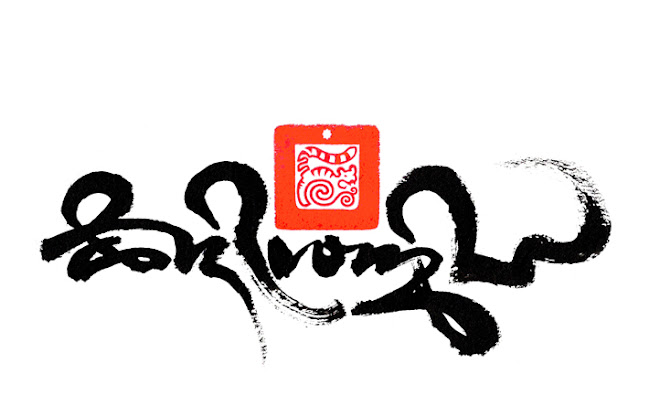
Karmapa

ཀ་

The badge of Tsurphu monastery,
the original seat of the Karmapas
in Tibet, founded in 1189 by the
Fist Karmapa Dusum Chenpa.
ཀརྨ་བཀའ་བརྒྱུད།

Ka ཀ་ is the first letter of the Tibetan alphabet and the first letter of the name Karmapa ཀརྨ་པ།
But more notably; the latter ka also refers to speech, that is of the aural transmission of the Dharma though the Kagyu lineage known as the 'Golden Rosary' as one bead in a string leads to another, so are the teachings and practices passed on down through  an unbroken lineage to the present day.
The Karmapa, Ogyen Trinley Dorje is the head of the Karma Kagyu lineage and the 17th in the line of Karmapa's 

The 16th and 17th Karmapas.
The above photo shows an astonishing resemblance between the 16th and 17th Karmapa of a similar age, not only in photo composition but also in location on grass next to a tent in the grounds of his seat monastery called Tsurphu in central Tibet. 
It was quite by accident that these two photographs found there way together after a life-time had passed between one incarnation to another.  

The 16th Karmapa Rangjung Rigpe Dorje '1924 - 1981'
A a seldom seen and delightful photography of the 16th Karmapa, was taken by Tashi's father Peter Mannox, who documented many other of the Kagyu lineage holders during the 1970's at Rumtek monastery in Sikkim, India.

The 17th Karmapa Ogyen Trinley Dorje, born '1985 -
The present Karmapa now resides in Northern India at his temporary camp at the Gyuto monastery in Dharamsala.


Karmapa-chenno mantra, Dru-tsa script, Tashi Mannox 2022
As the central figure to the Kagyu linage, the mantra to ask for blessing of the Karmapa is pronounced karmapa chénno which translates as 'Karmapa here me/take heed'.


To the left is an impression of one of the Karmapa's seals, signed by the 16th Karmapa, 
the hand-writing above the seal translates as
'Karma Kagyu Dharma institution'
༄། ཀརྨ་བཀའ་མརྒྱུདཆོས་སྡེ།
At the center of the seal design is the letters 'karmapa'.


A similar seal design to the above, perhaps a copy, clearly shows the letters 'karmapa' carved into the stone seal.
The script style is the father to the Horyig seal script called Phags-pa.
In both seal designs, the Phags-pa letters sit on an open lotus, radiating aura lines, above the letters are three 'jewels' representing the Buddha, Dharma and Sangha, either side of which are the sun and moon.  


At The top of this post is a badge of Tolung Tsuphu Monastery, there is an interesting little story to the creation of this badge of an international collaboration. 

Once upon a time... In June 1996 Tashi visited Tsurphu monastery along with Akong Rinpoche and his brother Lama Yeshe Losal, to meet the young 17th Karmapa. This was a particularly special occasion,  as for Lama Yeshe and Tashi, it was the first time they had seen the Karmapa since his previous incarnation.

Akong Rinpoche, Karmapa and Tsering Tashi.
One particular day Akong Rinpoche together with Tashi organized an audience with the Karmapa. The main purpose of this meeting was to take measurements so that Tashi could make robes for the Karmapa at a later date. 
Much of the day was spent in the Karmapa's private quarters where games where played with much enjoyment and laughter.
It was decided to offer Karmapa an embroidered badge, which He liked as something to give to every one of the monks in the monastery representing Tsurphu.

Drawing by Karmapa and Tashi.

As in the Photo, all three huddled around Karmapa's seat table to plot out how the badge should look. Above is a rough sketch that was made by Tashi at the time under the instructions from both Karmapa and Akong, additional marks were added by Karmapa, such as the curls at the top as he explained the decorated surround of the Dharma wheel and swirls to the scroll. Below He added the moon and the sun and even wrote moon and sun next to them. The design session ended with how to draw a star.

Fresh in mind and sketch in hand, Tashi returned to Scotland where he requested Sherab Palden Beru a master of Tibetan art, to create a design based on Karmapa's instruction. The design at the top of this post was created by one of Sherabs students under his direction.

Tashi then contacted some Buddhist friends, Tony and Rose, he had met earlier in that year, who happened to run a badge making business in Australia called 'Badger Makes Badges'. The artwork was sent to them around the globe and being devoted to Karmapa, hundreds of beautifully embroider badges where returned to Scotland and offered to Karmapa by Akong Rinpoche on his next returning visit to Tibet.

THE END


Another Karmapa related post on the Karmapa's dream flag can be followed here.


Sunday, 6 February 2011

Unchanging well being,

གཡུང་དྲུང་པ་ཏྲ།

The interlocking swastika pattern is called Sayagata in 
Japanese, meaning "gossamer figured-cloth pattern".

The Swastika is estimated to be a 3,000 year old symbol that is important to most of the worlds cultures for its sacred symbolism. A powerful image that in recent history; has been corrupted by a more unfortunate Nazis association.
The word 'swastika' is Sanskrit pronounced 'svastika'. Some of the earliest examples of the  symbol can be found in India.
Below shows the convoluted swastika pattern as part of the elaborate stone carving on the Dharmekh Stupa in Sarnath near Varanasi.
Such patterns are probably the origin of the Sayagata design, as shown above, which as a pattern on cloth, furniture, and architectural decoration, is widely reproduced across Tibet, Mongolia, China and Japan, in fact just about everywhere across the far East.


A detail of stone carving on the Sarnath stupa.


The stupa at Sarnath is built on the spot where the Buddha gave his first teaching after attaining enlightenment, known as the dear park, located North-East of Varanasi. 
The first construction of the stupa was during the reign of Emperor Ashoka (2nd century B.C.). It was later rebuilt to its present form in the early 6th century. 
In more recent times  a stone tablet was discovered in the center of the stupa with the word Dhamekha, this can be translated as Dharma Chakra, meaning "turning the wheel of the Dharma." which coincides with the records of Buddha's first sermon, when he "set the wheel of Dharma into motion."


A phoenix design by Sherab Palden Beru, adapted for Tibetan Table panels
by Tashi Mannox, note a different variation of
the convoluted swastika pattern in blue: གཡུང་དྲུང་པ་ཏྲ།


For Tibetans the swastika is used by both Buddhists and the pre-Buddhist religion called Bön, the symbol is generally differentiated by the direction that the swastika turns. The Buddhist version turns with the arms pointing clockwise  where as the Bön swastika spins anti-clockwise 

Here is an example of a 'heading' character of a Bön script called Zhang Zhung or smar-chen སྨར་ཆེན་ in Tibetan, the swastika used as part of the character is turning anti-clockwise.


More of the Zhang Zhung script spells out 'yung drung'  གཡུང་དྲུང་  in Tibetan, Which is the word used for swastika and translates as "rest unshakably" or "unchanging well-being" 


© Tashi Mannox 2011
Above is a calligraphy art piece by Tashi using the words g.young drung གཡུང་དྲུང་ to form the shape of a swastika. In India, Tibet, China and Japan, the swastika is considered a symbol of good luck. 


Sarnath stupa carving from the 6th century.


A detail from stone carvings found on the site of the Acropolis 


The famous Parthenon Παρθενων has stood proud at the Acropolis in Athens for the past 2,500 years. Like many ancient Greek architectural embellishments, the swastika σβάστικα is popular as a decorative theme. The Above carved detail is perhaps from the Roman occupation of the Parthenon, which demonstrates the favored use of the swastika as design feature.


Contemporary swastika design by Myoshka


The personal water tiger seal of Tashi Mannox
is repeated and turned to form a swastika like design.


Wednesday, 2 February 2011

Losar good wishes 2011


All the very best
 for a happy 
and prosperous 
year of the 
female Iron Rabbit.


"As the light of this New Year blazes

With excellent virtue and happiness
May these dependently arising appearances inseparable from emptiness, 
Bring benefit and prosperity in all the worlds there are,
May the light of auspiciousness always blaze bright"

Composed་by Khenpo Tsultrim Gyamtso Rinpoche at Tek Chok Ling near the great stupa in Boudhanath, Nepal, February 2010. Translated by Jim Scott.